
Last Updated on February 10, 2026
Purchasing your first home is a big stepping stone for your financial future. It’s easy to get lost in the what-ifs? and oh-mys! inspired by Pinterest boards and HGTV programming. But don’t forget—a starter home is just the first home you can afford, until you’re able to purchase something larger, pricier, and closer to the vision of your long-term dream home.
Starter homes may look different than you envision—and they are certainly shifting from what they were even a few years ago. However, there’s no reason why you can’t enjoy several great years in a nice home that meets your needs right now without breaking the bank.
Here are the characteristics to look for when shopping for today’s starter homes.
Builders are responding to consumer preferences in cost
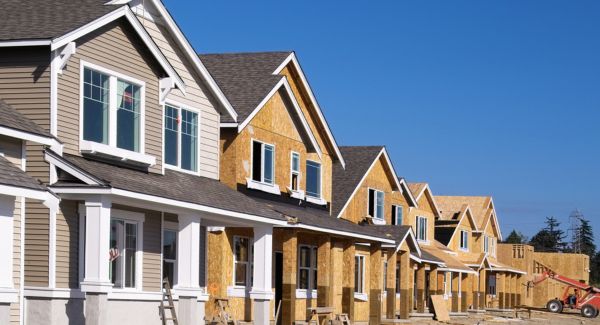
First time buyers favoring affordability have proven they are willing to buy slightly smaller homes than we’ve seen in years prior. To meet demand where it is, builders have responded by offering lower-cost units.
Last year’s State of the Nation’s Housing 2025 report from Harvard University’s Joint Center for Housing Studies found that “the median size of a new single-family home declined for the third straight year in 2024.” From a median of nearly 2,500 square feet in 2013, new construction homes are now coming in closer to 2,150 square feet.
According to the 2025 NAR Home Buyers and Sellers Generational Trends report, the median house size purchased among all buyers last year was 1,900 square feet. Home size purchased was lowest among buyers ages 26–34, at 1,600 square feet, but the median size did not top 2,000 square feet among any age group, regardless of whether it was a first home or not.
Density matters
The NAR report shows that a quarter of all buyers purchased something other than the detached single-family home of the white picket fence persuasion. Instead, 14% of buyers ages 18–25 and 8% of buyers 26–34 settled into townhomes. Another 14% of buyers ages 18–25 and 9% of buyers 26–34 chose to purchase apartments/condos.
The suburbs still reign supreme as the location of 45% of all homes purchased last year. However, younger buyers are purchasing in “urban area/central city” neighborhoods at higher rates than their older counterparts (21% for buyers ages 18–25 compared to the 16% average).
Proximity matters
That leads us into our next point, that proximity matters. As can be expected, buyers of prime working ages considered their commute times when making their home purchase—not just to their jobs, but to everything important to their lifestyles.
To single them out, buyers ages 26–34 were looking for starter homes that were convenient to the following features at higher rates than the average across all home buyers:
- Job – 30 points above the average
- Schools – +11 points
- Vet/outdoor space for pet – +10 points
- Friends and family – +8 points
- Parks/recreational facilities – +6 points
- Entertainment/leisure activities – +4 points
- Public transportation – +3 points
- Walkability – +2 points
Compromise is key
It’s no secret that cost increases are reshaping what homeownership looks like for many people, particularly first-time home buyers. From buying smaller homes to investing in multigenerational housing, buyers are getting creative when it comes to finding a starter home that meets their needs.
As we’ve seen above, many buyers are compromising on the size of the homes they purchase. According to NAR, 10% more younger buyers than the average compromise on size (32% for buyers ages 18–25 and 31% for buyers ages 26–34 compared to the average of 22%). Young buyers are also more likely to compromise on the condition and age of the home. Young buyers are purchasing homes built on average in the early 1980s, compared to 1994 for all buyers and 1999 for buyers ages 60+.
However, potential buyers reading this post will be delighted to see that the one place where few buyers seem to be budging is the number of bedrooms and bathrooms in the home. Across the board in 2025, buyers of every age bracket chose homes with a median of three bedrooms and two full bathrooms.
Price varies by region
Like the greater real estate market at large, the cost of a starter home varies widely depending on where you live. Luckily, markets across the Southeast and Midwest still offer relatively more home and property for the money. A quick search of howardhannatate.com shows a variety of starter homes across our footprint as low as the $160,000s.
Find your starter home today!
First-time home buyers, including young Millennials and Gen Z buyers, are shaping the housing market to their needs. If you’re an aspiring first-time home buyer—no matter your age—we can help you meet your real estate goals.
Learn more and reach out to a qualified professional real estate agent today!
Read more: 18 tips for first-time home buyers
Howard Hanna Allen Tate Real Estate is the #1 real estate company in the Carolinas, with more than 80 offices and 2,000 agents serving communities across North and South Carolina and Georgia. As part of Howard Hanna Real Estate Services, the largest family-owned and operated real estate company in the United States, Howard Hanna Allen Tate offers a full suite of real estate services, including mortgage, insurance, title and relocation. For more information, visit www.howardhannatate.com.